
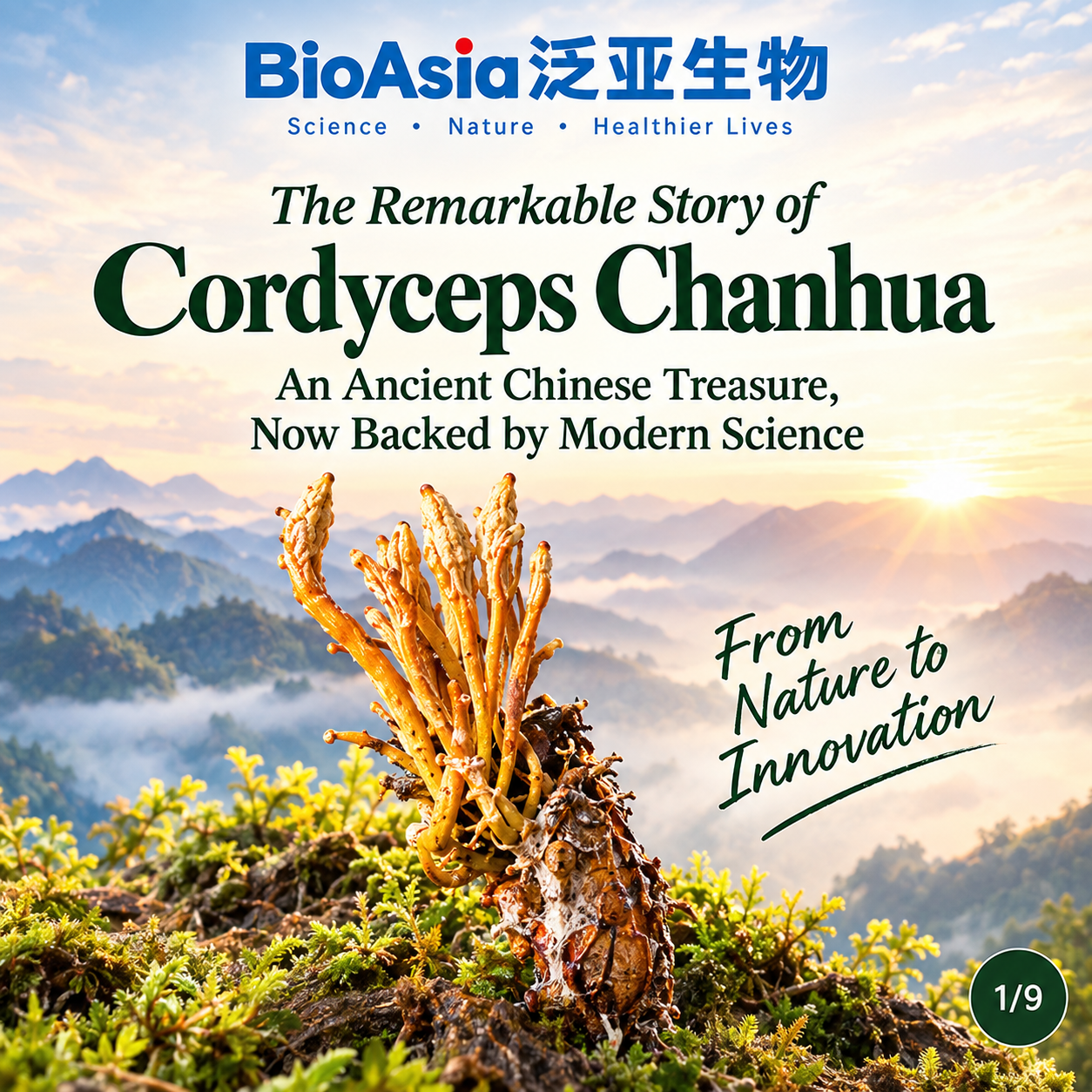
The Ancient “Cicada Flower” at the Intersection of Nature, Tradition and Modern Science
Introduction
For centuries, traditional Chinese medicine has used a remarkable fungus known as Cicada Flower, or Chanhua, as a medicinal and tonic resource. Unlike ordinary mushrooms that grow on plants or decaying organic matter, Chanhua has a fascinating relationship with insects: the fungus naturally infects cicada nymphs, develops within the host, and eventually produces fungal structures that emerge from the insect’s body.
Today, Cordyceps chanhua has attracted increasing scientific interest because researchers have identified a variety of compounds and biological activities associated with the fungus. Research has investigated its polysaccharides, nucleosides, sterols and other secondary metabolites, as well as potential antioxidant, immunomodulatory, metabolic, renal and cellular effects [1–4].
However, understanding Chanhua requires an important distinction: traditional use and laboratory findings are not the same as proven clinical effects in humans. Much of the modern evidence remains preclinical, meaning that it comes from laboratory experiments, cultured cells or animal models rather than large human clinical trials.
1. What Is Cordyceps Chanhua?
Cordyceps chanhua is an entomopathogenic fungus belonging to the family Cordycipitaceae. The term entomopathogenic means that the fungus naturally infects insects.
The organism has historically been referred to in scientific literature by names including Isaria cicadae 和 Cordyceps cicadae. Modern fungal taxonomy has complicated the picture because specimens previously grouped under Isaria cicadae were subsequently distinguished from the species now formally described as Cordyceps chanhua [1,5].
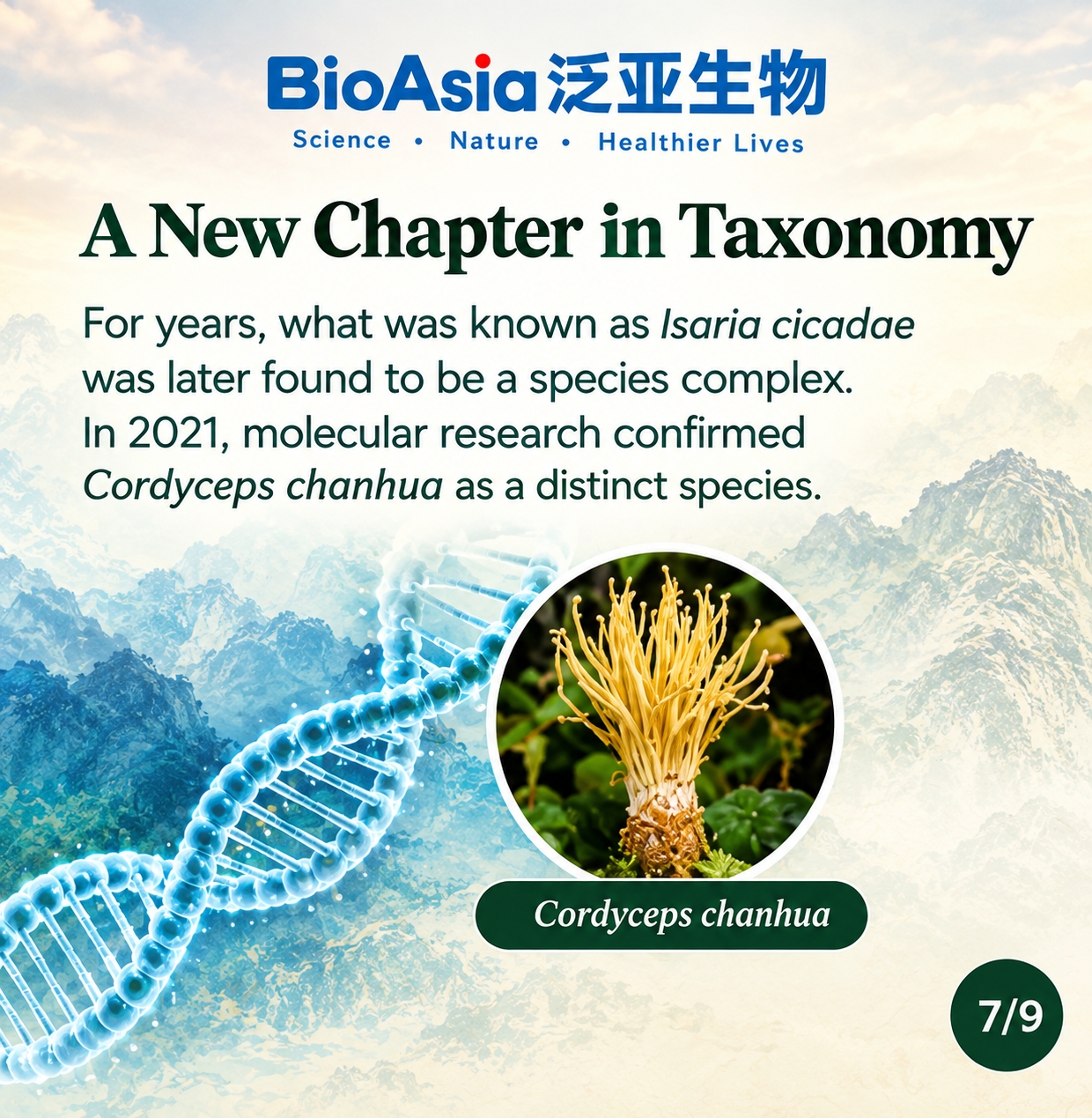
The current NCBI taxonomy database recognizes Cordyceps chanhua as a species within the genus 冬蟲夏草, while Cordyceps cicadae is also maintained as a separate taxonomic entry.
This distinction is important when interpreting scientific literature: older research discussing “Cicada Flower,” “Isaria cicadae” or “Cordyceps cicadae” should not automatically be assumed to refer to exactly the same taxonomic entity as every modern reference to C. chanhua.
For educational and commercial communication, therefore, it is useful to acknowledge the historical names while being precise about the scientific identity of the material being studied.
2. Why Is It Called “Cicada Flower”?
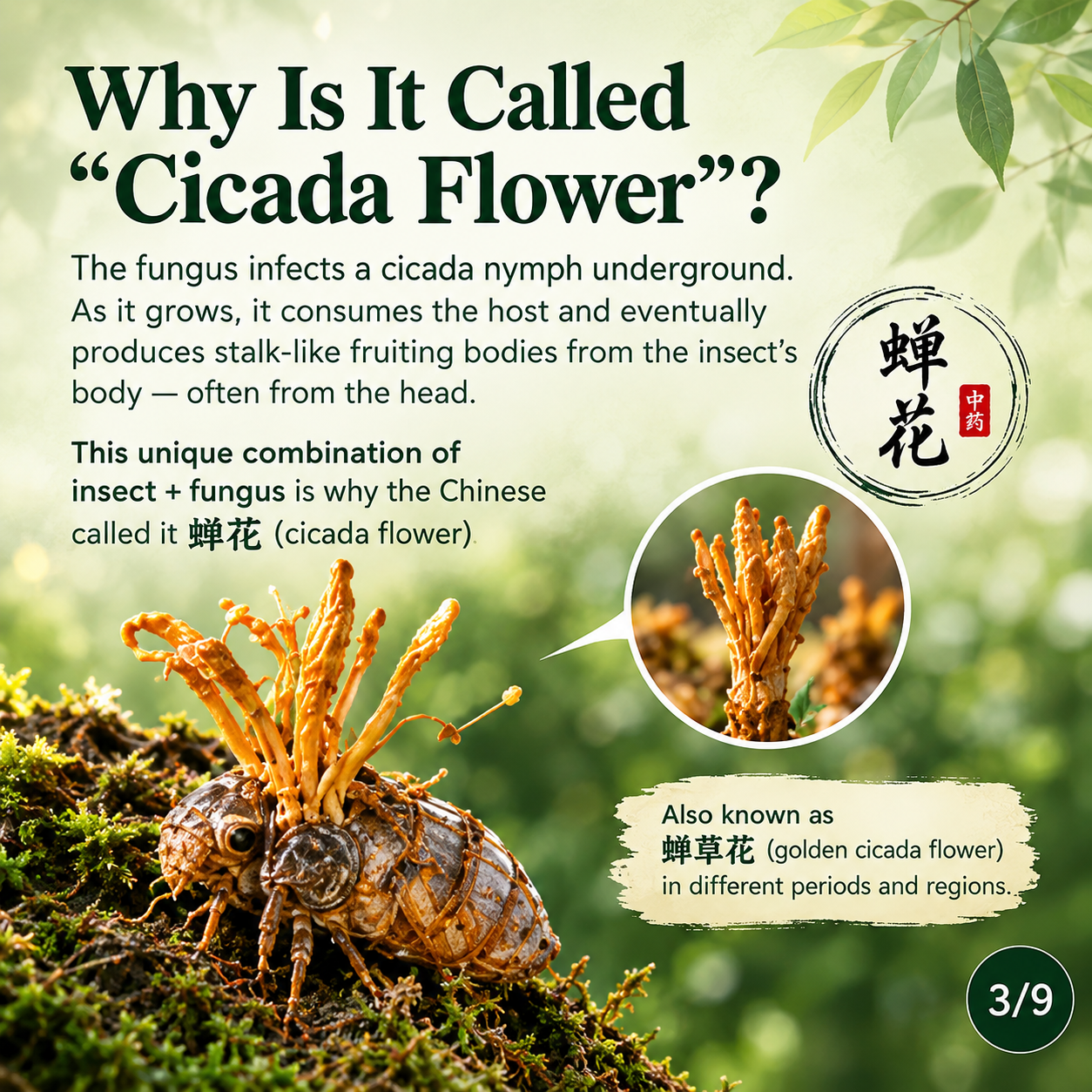
The name “Cicada Flower” comes from the fungus’s unusual natural life cycle.
In nature, fungal spores infect suitable cicada nymphs living underground. The fungus grows through the insect’s body, eventually replacing much of the host tissue. Under suitable environmental conditions, fungal structures emerge from the insect and develop above the soil.
The resulting structure resembles a small flower growing from the remains of the cicada—hence the traditional name Cicada Flower, or Chanhua.
Scientific studies have described this organism as unusual among Cordyceps because it can produce asexual fruiting structures, rather than following the reproductive pattern commonly associated with other better-known Cordyceps species [2].
Genomic research has also demonstrated that 蟬 contains genes associated with the production of secondary metabolites and enzymes involved in interactions with its insect host [2]. These findings help explain why the fungus has become interesting not only from a traditional-medicine perspective but also as a subject of modern biotechnology.
3. A Medicine with a Long History
Cicada Flower is not a newly discovered wellness ingredient.
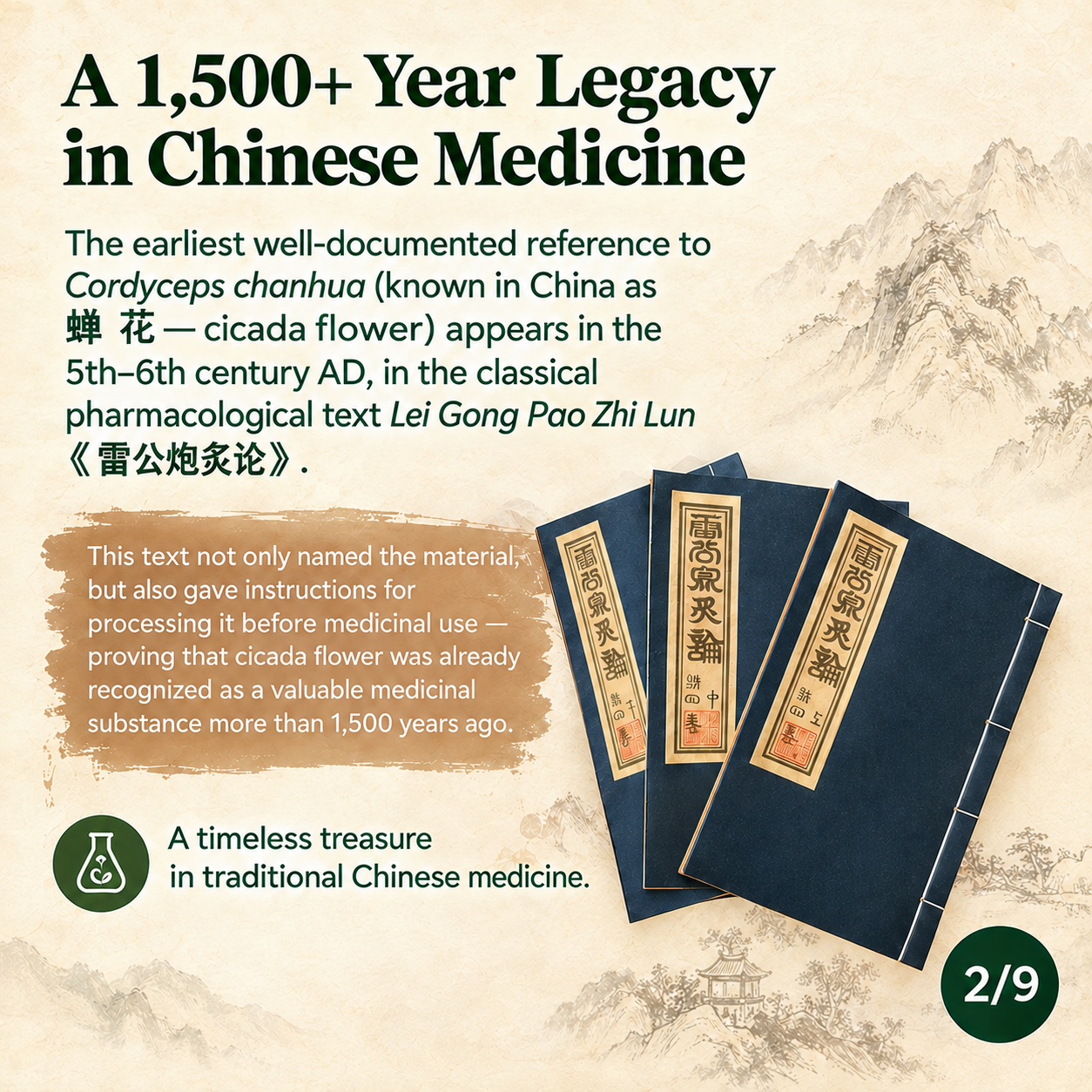
Historical records indicate that Cicada Flower has been used in traditional Chinese medicine for approximately 1,500–1,600 years [1,3].
Traditional applications have included its use as a tonic and in preparations associated with conditions involving the eyes, kidneys, fever, fatigue and other health concerns. A review of the historical and scientific literature describes its long-standing use in Chinese medicine and summarizes research into its cultivation, chemical constituents and biological activities [1].
Another review reported traditional uses extending to conditions such as malaria, palpitations, fever, diabetes, eye disorders, dizziness and chronic kidney disorders [3].
These historical uses provide an important reason for scientific investigation—but traditional use alone does not establish modern clinical efficacy. Modern research must determine which compounds are responsible for particular biological effects, how they work, what doses are appropriate, and whether those effects translate into meaningful benefits in humans.
4. What Makes Chanhua Scientifically Interesting?

One of the major reasons scientists are studying Chanhua is its complex chemical composition.
Research has identified a range of potentially bioactive compounds, including:
- Polysaccharides
- Nucleosides
- Adenosine
- Cordycepin
- Ergosterol
- Sterols
- Peptides
- Macrolides
- Other secondary metabolites
The precise composition can vary according to the fungal strain, cultivation method, developmental stage and growing conditions [1,2,4].
5. Polysaccharides and Cellular Research
Polysaccharides are among the compounds frequently investigated in medicinal fungi.
Researchers have isolated different polysaccharides from material identified as Isaria cicadae and investigated their biological activity in laboratory models. One study identified two heteropolysaccharides containing sugars including mannose, glucose and galactose and reported immunomodulatory activity in cultured macrophage cells [6].
Such findings are scientifically interesting because immune cells respond to many complex polysaccharides through molecular signalling pathways.
6. Cordycepin and Other Nucleosides
Another area of interest is the presence of nucleoside-related compounds.
Cordycepin, chemically known as 3′-deoxyadenosine, is one of the compounds associated with the broader Cordyceps group. Research into 蟬 has investigated genes and metabolic pathways potentially involved in cordycepin biosynthesis [2,4].
Genomic and transcriptomic research has identified differences in gene expression between the mycelium, fruiting body and sclerotium and identified genes associated with purine metabolism and cordycepin biosynthesis [4].
Cordycepin has attracted considerable interest because laboratory studies involving different Cordyceps species have investigated mechanisms related to inflammation, oxidative stress, cellular signalling and cancer biology.
But again, evidence for a compound is not automatically evidence that a particular whole-mushroom product produces a therapeutic effect in humans.
7. Chanhua and Kidney Research
The relationship between Cicada Flower and kidney health is one of the most interesting areas of its traditional and scientific history.
Traditional Chinese medicine has used Chanhua preparations in connection with kidney health for centuries [1,3].
Modern researchers have also investigated this area.
For example, a 2011 experimental study examined Cordyceps cicadae extracts in a rat model involving reduced kidney mass. The researchers reported improvements in several measures associated with renal dysfunction and proposed potential renoprotective effects [7].
This provides preclinical evidence, not proof that Chanhua treats chronic kidney disease in humans.
The distinction is important:
Laboratory evidence → animal evidence → human clinical evidence
These are different levels of evidence.
A promising result in an animal model can justify further research, but it cannot by itself establish that a dietary supplement prevents, reverses or treats kidney disease in people.
8. Antioxidant and Cellular Protection
Oxidative stress occurs when the production of reactive molecules exceeds the body’s ability to neutralize them.
Because oxidative stress is involved in many biological processes, researchers have investigated whether compounds from Cordyceps species can influence oxidative-stress pathways.
Studies involving Chanhua and its constituents have reported antioxidant-related activities in laboratory models [1,2,6].
More recent research has also investigated specific Chanhua-derived compounds in cellular-protection models. For example, a 2024 study examined myriocin associated with Cordyceps cicadae and reported protective effects in experimental models of retinal pigment epithelial damage [8].
These findings are intriguing, particularly in the context of cellular resilience and age-related biological processes.
Nevertheless, the study was conducted using cell and animal models, not as a clinical trial demonstrating that Chanhua prevents or treats age-related macular degeneration in humans [8].
9. Chanhua and Healthy Ageing
Healthy ageing is increasingly understood as more than simply living longer.
Modern ageing research examines processes including:
- cellular stress
- 粒線體功能
- oxidative balance
- inflammation
- metabolic health
- immune regulation
- tissue maintenance
- cellular damage and repair
Some compounds identified in Chanhua research interact with biological pathways relevant to these areas.
This has led researchers to investigate whether Chanhua may have broader potential in supporting biological resilience.
At present, much of the evidence linking Chanhua to these concepts comes from biochemical, cellular and animal research rather than long-term controlled human studies.
The scientific opportunity lies precisely here: understanding whether interesting laboratory mechanisms can eventually translate into measurable improvements in human healthspan.
10. Wild Chanhua Versus Cultivated Chanhua
One of the most fascinating aspects of Chanhua research is that scientists have developed methods for cultivating it.
Historically, naturally occurring Cicada Flower depended on infection of suitable insect hosts in the natural environment. However, demand for the fungus and limitations associated with wild harvesting created the need for controlled cultivation.

Researchers have investigated several cultivation approaches, including:
- liquid fermentation
- cereal or solid-substrate culture
- insect-host cultivation
- controlled soil cultivation
Studies have shown that cultivation conditions can influence the fungus’s growth, yield, microbial community and chemical composition [9].
One study comparing cultivation environments found that although high proportions of inoculated pupae could produce fruiting bodies, the cultivation environment influenced the levels of amino acids, polysaccharides, mannitol, cordycepin and adenosine [9].
This is a crucial scientific lesson:
How a medicinal fungus is grown can influence what is ultimately present in the finished material.
Therefore, cultivation method, strain identification, harvesting stage, processing and quality control all matter when evaluating a Chanhua product.
11. Why Controlled Cultivation Matters
Wild harvesting can create problems of:
Availability → consistency → sustainability → authentication → quality control
Controlled cultivation can help address some of these challenges.
It provides the possibility of producing Chanhua under standardized conditions, reducing dependence on unpredictable wild resources and making it easier to monitor the production process.
Modern cultivation research has therefore become an important part of the development of Chanhua as a functional food and medicinal-mushroom resource [9].
At the same time, cultivation does not automatically make every product equivalent.
A responsible quality-control system should consider:
- Correct species or strain identification
- Cultivation substrate
- Cultivation conditions
- Harvesting stage
- Extraction or processing method
- Chemical composition
- Microbial safety
- Heavy-metal and contaminant testing
- Batch-to-batch consistency
- Appropriate storage and stability
12. Chanhua Is Not the Same as Every Other Cordyceps
The word “Cordyceps” describes a much broader group of fungi.
Among the best-known species are:
- Cordyceps chanhua
- 蛹蟲草
- 中華蟲草
These organisms are related but are not interchangeable.
They differ in:
- taxonomy
- host relationships
- cultivation requirements
- chemical profiles
- biological characteristics
- research evidence
Reviews comparing 蟬 with C. militaris 和 O. sinensis have concluded that although these fungi share certain biological properties and compounds, further standardization and comparative research are necessary before they can be considered equivalent sources of Cordyceps products [3].
This is especially important in consumer education.
Chanhua should be understood on its own scientific merits rather than simply borrowing evidence from another Cordyceps species.
13. What Does the Science Actually Tell Us?
The current research can be summarized in three broad levels.
Level 1 — Traditional evidence
Chanhua has a long history of use in traditional Chinese medicine, extending back many centuries [1,3].
Level 2 — Preclinical scientific evidence
Laboratory and animal studies have investigated:
- antioxidant activity
- immunomodulatory activity
- metabolic effects
- cellular protection
- renal effects
- neuroprotective activity
- potential anti-inflammatory mechanisms
- other biological activities [1–4,6–8]
Level 3 — Human clinical evidence
This is where the evidence base is considerably more limited.
Many of the interesting biological effects reported in the scientific literature have not yet been demonstrated through large, well-controlled human clinical trials specifically evaluating standardized Cordyceps chanhua preparations.
Consequently, Chanhua should be viewed as a promising area of medicinal-mushroom research rather than a scientifically established treatment for specific diseases.
14. The Importance of Scientific Standardization
One of the major challenges in medicinal-mushroom research is that the word “extract” does not necessarily describe a standardized substance.
Two Chanhua extracts may differ because they were:
- produced from different strains;
- cultivated on different substrates;
- harvested at different stages;
- extracted using different solvents;
- processed differently;
- standardized to different compounds.
Research has demonstrated that cultivation conditions can change metabolite profiles [9].
This means that future Chanhua research will benefit from standardized preparations that clearly identify:
species → strain → cultivation method → extraction method → active constituents → dose → safety profile
Only then can researchers make meaningful comparisons between studies.
15. From Ancient Knowledge to Modern Biotechnology
Perhaps the most interesting story about Chanhua is not simply that it is an ancient medicinal fungus.
It is that an organism known through traditional knowledge is now being investigated using genomics, metabolomics, biotechnology, controlled cultivation and modern pharmacology.
Genome research has helped scientists investigate how the fungus interacts with its insect host and how it produces specialized metabolites [2].
Cultivation research is helping move Chanhua away from dependence on unpredictable wild resources [9].
Chemical research is identifying individual compounds that may contribute to its biological activity [1,6].
And experimental studies are beginning to investigate specific mechanisms through which these compounds may interact with biological systems [7,8].
This creates an important bridge:
Traditional knowledge provides historical context.
Modern science provides mechanisms, measurements and testing.
Biotechnology provides reproducibility and scalability.
16. What Should Consumers Look For?
Anyone interested in a Chanhua product should look beyond the word “Cordyceps” on the label.
Important questions include:
Is the organism properly identified?
The taxonomy of Cicada Flower is complex, and historical scientific names can create confusion [1,5].
Is the source known?
Consumers should be able to determine whether the material is wild-collected, cultivated on an insect host, fermented, or produced using another controlled method.
Is the product standardized?
The label should ideally provide meaningful information about the preparation and, where appropriate, its characteristic compounds.
Has the product been tested?
Quality testing can help establish identity, purity, microbiological safety and contaminant levels.
Are the health claims supported by appropriate evidence?
A laboratory study should not be presented as if it were a human clinical trial.
This distinction is essential for responsible science communication.
17. The Bigger Question: What Can Chanhua Teach Us About Healthy Living?
The scientific interest in Chanhua goes beyond a single mushroom.
It illustrates a broader movement in health science: the search for naturally occurring compounds that may interact with the body’s biological systems in complex ways.
Rather than viewing wellness through a single-compound or single-symptom lens, researchers are increasingly examining relationships among:
nutrition → metabolism → cellular function → inflammation → resilience → healthy ageing
Chanhua provides an interesting case study because it contains multiple classes of bioactive compounds and has a long history of traditional use.
Yet its scientific story is still developing.
The responsible position is therefore neither to dismiss traditional knowledge nor to turn promising laboratory findings into exaggerated medical claims.
Instead, the appropriate approach is:
Study it. Standardize it. Test it. Understand it.
Conclusion

Cordyceps chanhua, traditionally known as Cicada Flower or Chanhua, is one of the most fascinating medicinal fungi at the intersection of traditional knowledge and modern biotechnology.
Its unusual life cycle, long history of traditional use, complex chemical composition and growing body of laboratory research have made it an increasingly important subject of scientific investigation.
Research has identified compounds including polysaccharides, nucleosides, adenosine, cordycepin, ergosterol and other secondary metabolites. Experimental studies have investigated biological activities ranging from immunomodulation and antioxidant effects to renal and cellular protection [1–9].
But the most important scientific message is one of perspective.
Chanhua has a remarkable history and promising research profile, but many proposed health effects still require stronger human clinical evidence.
Its future may therefore lie not in replacing conventional medicine, but in the careful scientific exploration of its compounds, mechanisms, cultivation, safety and potential contribution to healthy living and healthy ageing.
From a fungus growing from a cicada underground to laboratories studying its genome and metabolites, Chanhua represents a remarkable journey.
參考
[1] Li, C. R., Wang, Y. Q., Cheng, W. M., Chen, Z. A., Hywel-Jones, N., & Li, Z. Z. (2021). Review on Research Progress and Prospects of Cicada Flower, Isaria cicadae (Ascomycetes). International Journal of Medicinal Mushrooms, 23(4), 81–91. doi:10.1615/IntJMedMushrooms.2021038085.
[2] Lu, Y., Luo, F., Cen, K., et al. (2017). Omics data reveal the unusual asexual-fruiting nature and secondary metabolic potentials of the medicinal fungus Cordyceps cicadae. BMC Genomics, 18, 668. doi:10.1186/s12864-017-4060-4.
[3] Ng, T. B., Wang, H. X., & Ngai, P. H. K. / relevant review literature on Cordyceps cicadae comparative medicinal properties. Can Cordyceps cicadae be used as an alternative to Cordyceps militaris and Cordyceps sinensis? A review. Journal of Ethnopharmacology (2020). doi:10.1016/j.jep.2020.112879.
[4] Research on cordycepin biosynthesis and transcriptomic characteristics of Cordyceps cicadae. Identification of cordycepin biosynthesis-related genes through de novo transcriptome assembly and analysis in Cordyceps cicadae.
[5] National Center for Biotechnology Information (NCBI). Taxonomy: Cordyceps chanhua and related Cordyceps taxa.
[6] Research on polysaccharides isolated from Isaria cicadae. Two heteropolysaccharides from Isaria cicadae Miquel differ in composition and potentially immunomodulatory activity.
[7] Zhu, R., Chen, Y. P., Deng, Y. Y., Zheng, R., Zhong, Y. F., Wang, L., & Du, L. P. (2011). Cordyceps cicadae extracts ameliorate renal malfunction in a remnant kidney model. Journal of Zhejiang University-SCIENCE B, 12(12), 1024–1033. doi:10.1631/jzus.B1100034.
[8] Ma, S. Z., Dong, S., Zhou, Z. Y., et al. (2024). The protective role of Cordyceps cicadae and its active ingredient myriocin against sodium iodate-induced age-related macular degeneration via an anti-necroptotic TNF-RIPK1/3 pathway. Journal of Ethnopharmacology, 334, 118565. doi:10.1016/j.jep.2024.118565.
[9] Zeng, Z., Mou, D., Luo, L., Zhong, W., Duan, L., & Zou, X. (2021). Different Cultivation Environments Affect the Yield, Bacterial Community and Metabolites of Cordyceps cicadae. Frontiers in Microbiology, 12, 669785. doi:10.3389/fmicb.2021.669785.