
Perhaps you recognise it: one night you wake up hot and sweaty. The next day you feel more tired than usual, and wonder why things that once felt easy suddenly take more energy. For many women, these changes begin well before the final menstrual period.
Menopause, sometimes called the menopausal transition, differs from person to person. Some notice very little. Others find that the changes affect sleep, work, relationships and the feeling of being at home in their own body. Putting words to what is happening can be an important first step.
Interested in Plantamed Refemme Plus? See Refemme Plus from Plantamed or explore Plantamed products.
Menopause is the period when the ovaries’ hormone production changes and menstruation eventually stops. The transition can last several years, and the experience varies greatly from person to person.
Common symptoms may include hot flushes, sweating, sleep difficulties, mood changes and dry mucous membranes. Some people also experience muscle or joint discomfort. This does not mean that everyone has the same symptoms or experiences them in the same way. 1177 describes menopause as an individual period with wide variation.
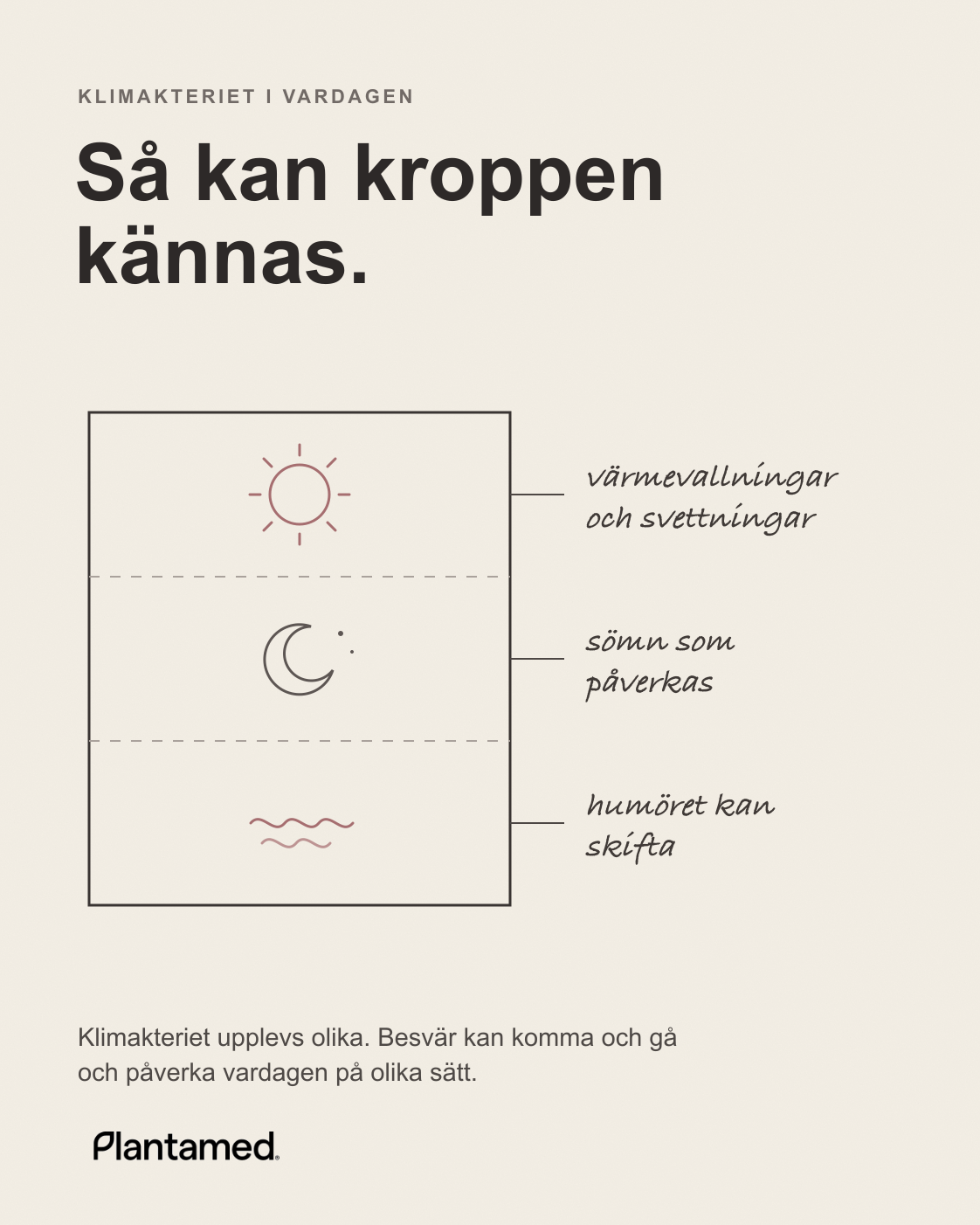
Everyday life can also make the transition feel harder: work responsibilities, family life, stress and too little recovery may occur at the same time as the body changes. Wellbeing during menopause is therefore not about simply coping alone. It is about listening, prioritising and seeking appropriate support when needed.
Understanding what is happening does not mean having to accept feeling unwell. A 2023 systematic review found that menopause education interventions may support quality of life and symptom management, although the authors emphasised the need for more well-designed studies. Knowledge can make it easier to describe symptoms, ask the right questions and decide when to ask for help. Read the review on PubMed.
It is also important to distinguish between everyday support, dietary supplements and medical treatment. For troublesome hot flushes or sweating, treatment choices should be discussed with healthcare professionals. An evidence review from The Menopause Society describes hormone therapy as the most effective medical treatment for vasomotor symptoms in people for whom it is appropriate; assessment should always be individual. Read the position statement on PubMed.
Many women say that the most challenging part is not always one individual symptom. It is the uncertainty: Is this stress? Is it sleep? Is it menopause? And how much should I have to manage on my own?
Talking about the changes with a partner, friend or healthcare contact can make it easier to understand your own pattern. A simple note of sleep, hot flushes, bleeding and how everyday life is affected can also be useful before a healthcare appointment.
Want to read the product information first? Discover Refemme Plus.
There is no one solution that suits everyone. Swedish 1177 highlights regular physical activity, recovery and stopping smoking as parts of self-care. Many people also find that layered clothing and a cooler sleeping environment make warm moments easier to manage.
The important thing is not to dismiss symptoms that affect your life. Contact a healthcare centre or gynaecology clinic if, for example, sleep problems, sweating, low mood or mood changes become difficult in daily life. Bleeding that returns more than a year after the final menstrual period should also be assessed by healthcare services. Read 1177’s advice on menopause symptoms.
Helena Andersson has consented to sharing her name and personal experience. According to Helena, she felt much better after Plantamed Refemme Plus became part of her daily routine.
Helena’s account is her own experience. Dietary supplements do not affect everyone in the same way, and her experience does not replace medical advice or an individual assessment from healthcare services.
Read more about the product Helena chose: Plantamed Refemme Plus.
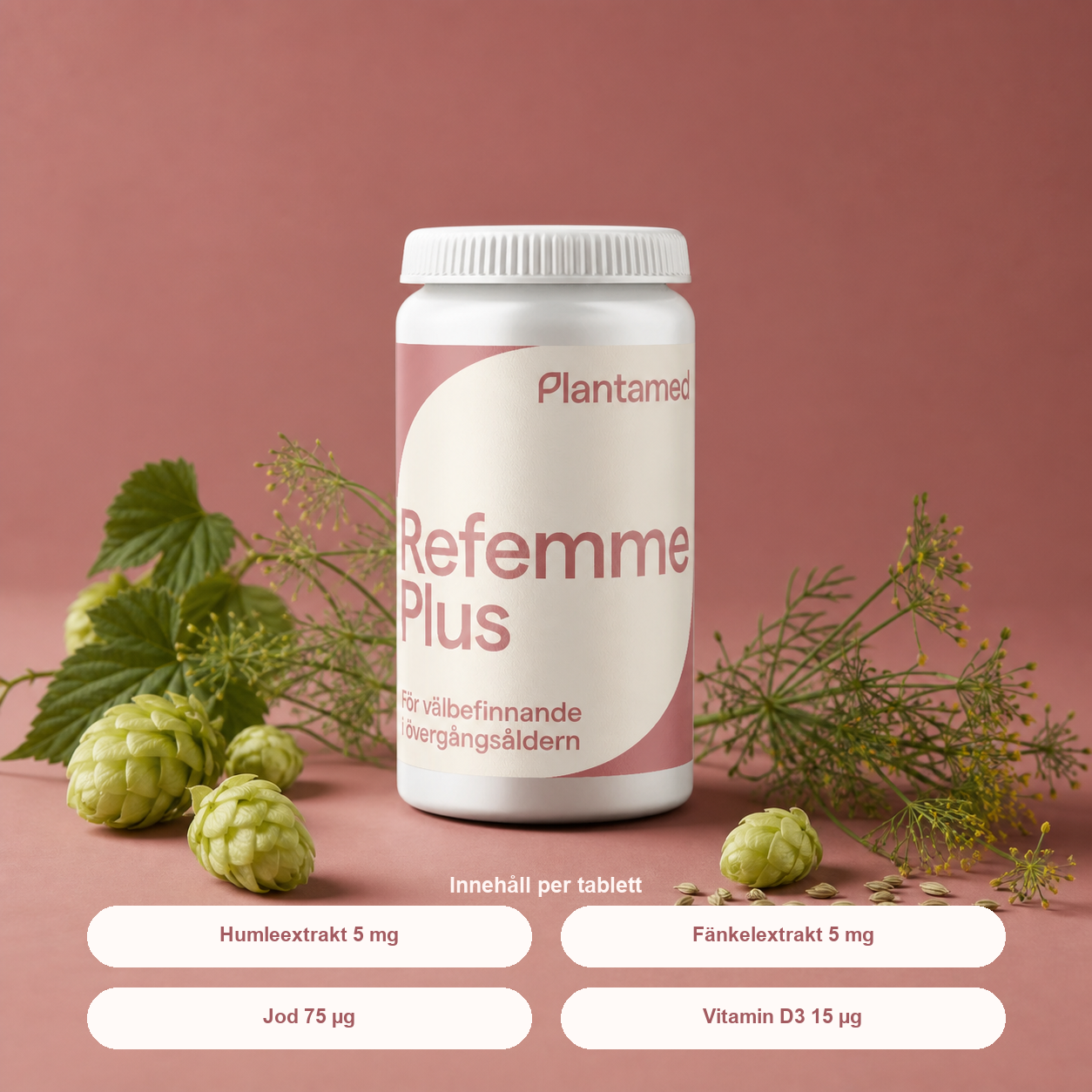
Plantamed Refemme Plus is a plant-based dietary supplement in tablet form, with 90 tablets per pack. It contains, among other ingredients, hop extract, fennel extract, iodine and vitamin D3. Always check the current product label for the complete ingredient list, allergen information and recommended use. See the current Refemme Plus product page before purchasing.
Iodine contributes to normal thyroid function and normal energy-yielding metabolism. Vitamin D contributes to the normal function of the immune system and to the maintenance of normal bones. These are authorised nutrition claims for the respective nutrients when the conditions of use are met.
Plantamed Refemme Plus is a dietary supplement, not a medicine. It should be used to complement a varied diet and a healthy lifestyle and must not replace assessment or treatment from healthcare services. An evidence review of non-hormonal options does not consider herbal preparations or dietary supplements to be proven treatments for hot flushes. For this reason, we do not claim that Refemme Plus treats menopause symptoms. Read the evidence review on PubMed.
You should not have to manage severe symptoms alone. Seek medical care if menopause symptoms significantly affect sleep, work or quality of life, if you feel low in mood, or if you have abnormal bleeding. Healthcare services can provide advice and help you choose an appropriate next step.
Being curious about your body is not a sign of weakness. It is one way to give yourself better conditions in a new phase of life.
Ready to learn more about Plantamed Refemme Plus? Visit the product page and see current product information.
This article is intended for general information and does not replace medical advice. If you have questions about menopause symptoms or treatment, contact healthcare services or call 1177 for healthcare advice.