
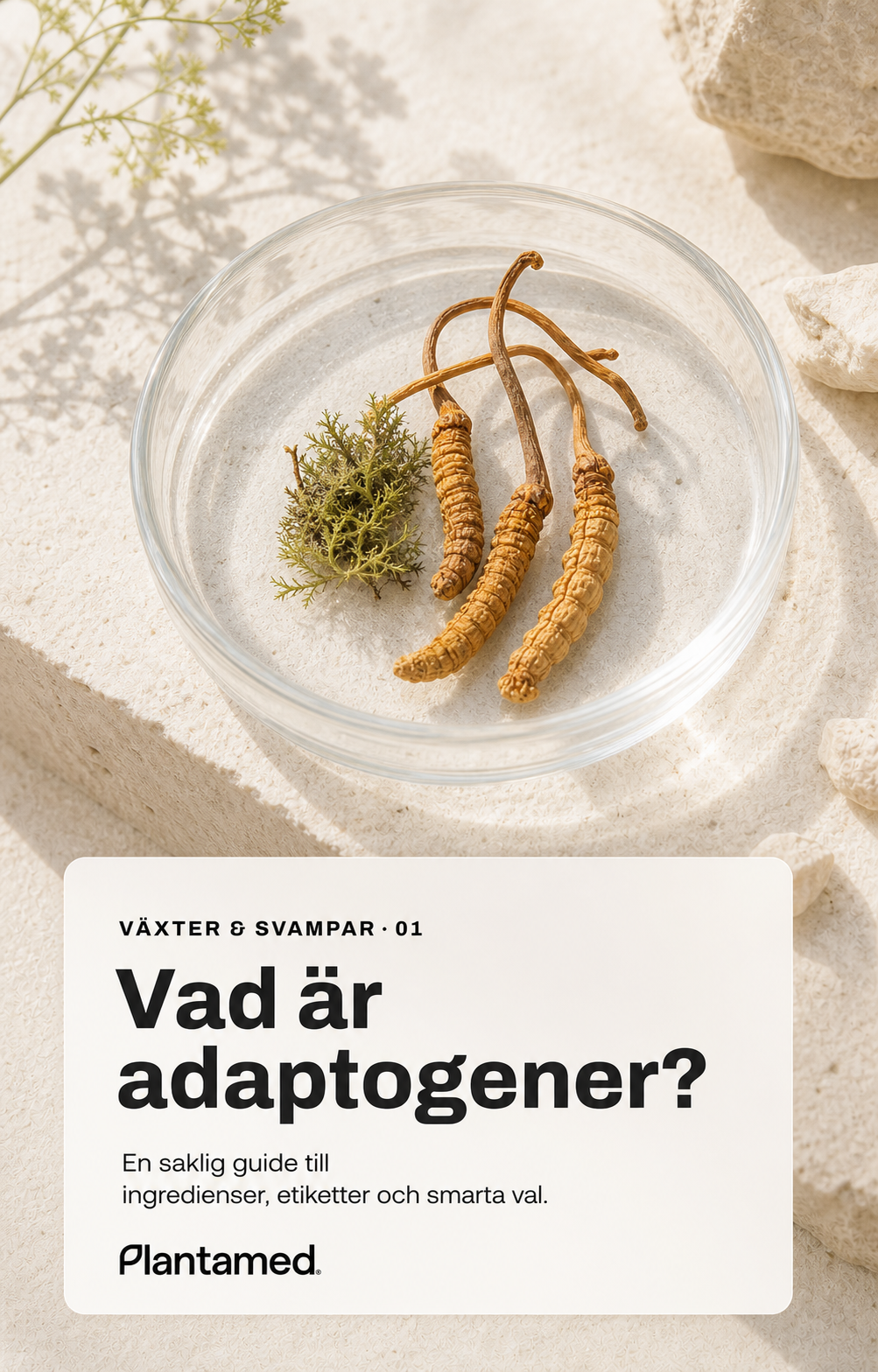
More and more people are searching for adaptogens, adaptogenic herbs and medicinal mushrooms. But what do these terms actually mean, and what should you look for when comparing a dietary supplement? Here, we cover the basics without making big promises and with a focus on clear product information.
The term adaptogens is often used in discussions about herbs, roots and mushrooms. It appears in books, on social media and in connection with dietary supplements, but it is not always used in the same way. A useful starting point is this: the term describes one way of talking about certain botanical ingredients. It is not, by itself, a promise of how a product will work for any individual.
When you read about adaptogens, it is helpful to distinguish between three things:
In the EU, food health claims must be clear and scientifically substantiated. The word “adaptogen” does not replace an authorised health claim. This is a useful principle to keep in mind when comparing dietary supplements. EFSA explains how health claims are assessed.
Searches for adaptogenic herbs and medicinal mushrooms often appear in the same context, but they do not necessarily describe the same thing. Adaptogenic herbs usually refer to plant ingredients. Medicinal mushrooms is a broader everyday term for mushrooms discussed in traditional contexts or used in dietary supplements.
It is important not to treat all plants or mushrooms as interchangeable. Species, plant part, cultivation method, preparation and amount can differ. A research finding on one species or extract cannot therefore automatically be applied to another product.
This is particularly relevant for Cordyceps. The name is used for several species and related fungi. Research on, for example, Cordyceps militaris or Ophiocordyceps sinensis is not the same as research on Cordyceps cicada. A scientific review of Cordyceps notes that the genus includes many species, which is one reason to always check the full species name. Read the review on PubMed.
Behind the search for adaptogen effects is often a reasonable question: “What can I realistically expect?” A responsible answer does not start with a guarantee. Experiences can vary, and the strength of scientific evidence may differ depending on the ingredient, species, amount and study design.
Rather than looking for the broadest possible claim, it is better to ask:
This makes it easier to distinguish useful product information from overly broad marketing. Dietary supplements are foods intended to supplement the diet, not to replace a varied diet or medical advice. The Swedish Food Agency explains what dietary supplements are.
Searches for mushroom extracts and buy Cordyceps show that many people want to compare products before deciding. Here is a simple checklist.
“Mushroom” or “Cordyceps” is often too general. Look for the specific species that is actually stated. This makes it easier to understand what the product contains and avoid confusing different types of raw materials.
A number on the front of a pack does not always tell the whole story. Read the amount per tablet, capsule or daily serving, and compare it with the product’s recommended use.
Some people prefer a simple product with one main ingredient. Others prefer combinations. Neither model is automatically better. What matters is that you can see what you are getting and make an informed choice.
Do not exceed the recommended daily dose. If you use medicines, are pregnant or breastfeeding, or have questions about your circumstances, consult a healthcare professional before using dietary supplements. The Swedish Food Agency also recommends not combining dietary supplements and medicines without first consulting a doctor. Read the authority’s advice on risks associated with dietary supplements.
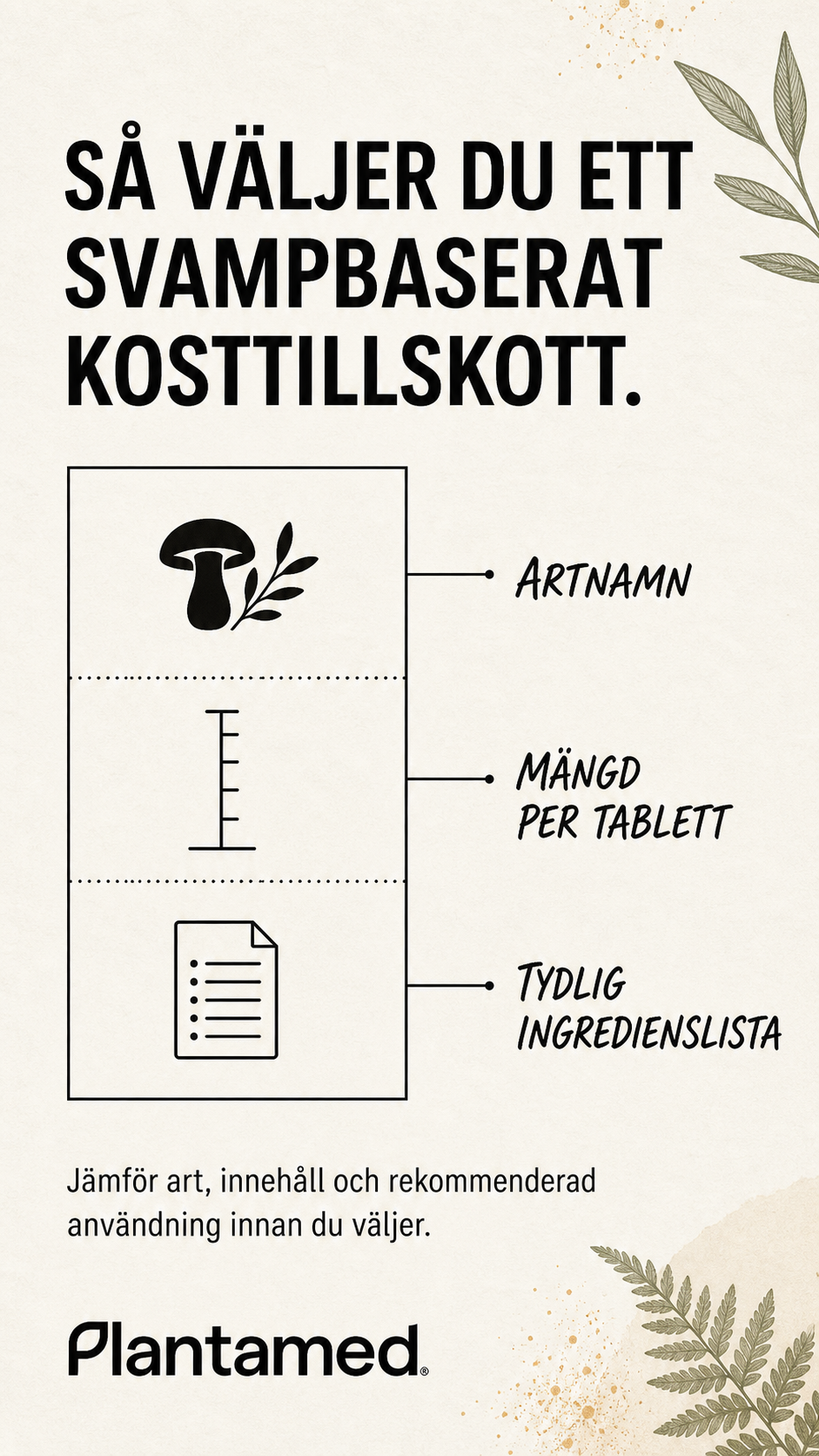
When searching for Cordyceps, you will often encounter many different names. This can create the impression that all products are alike, but that is an oversimplification. Species identification matters both for transparency and for interpreting research correctly.
A safety review of Cordyceps fungi includes, among others, C. cicadae, C. militaris and other species, and underlines that a safety assessment must take the specific fungus and product into account. This is another reason to choose products that clearly disclose their ingredient. Read the safety review in PubMed Central.
For consumers, the lesson is simple: do not use research on another species as evidence that a particular product has the same properties. Start instead with the label, the stated ingredient and reliable product information.
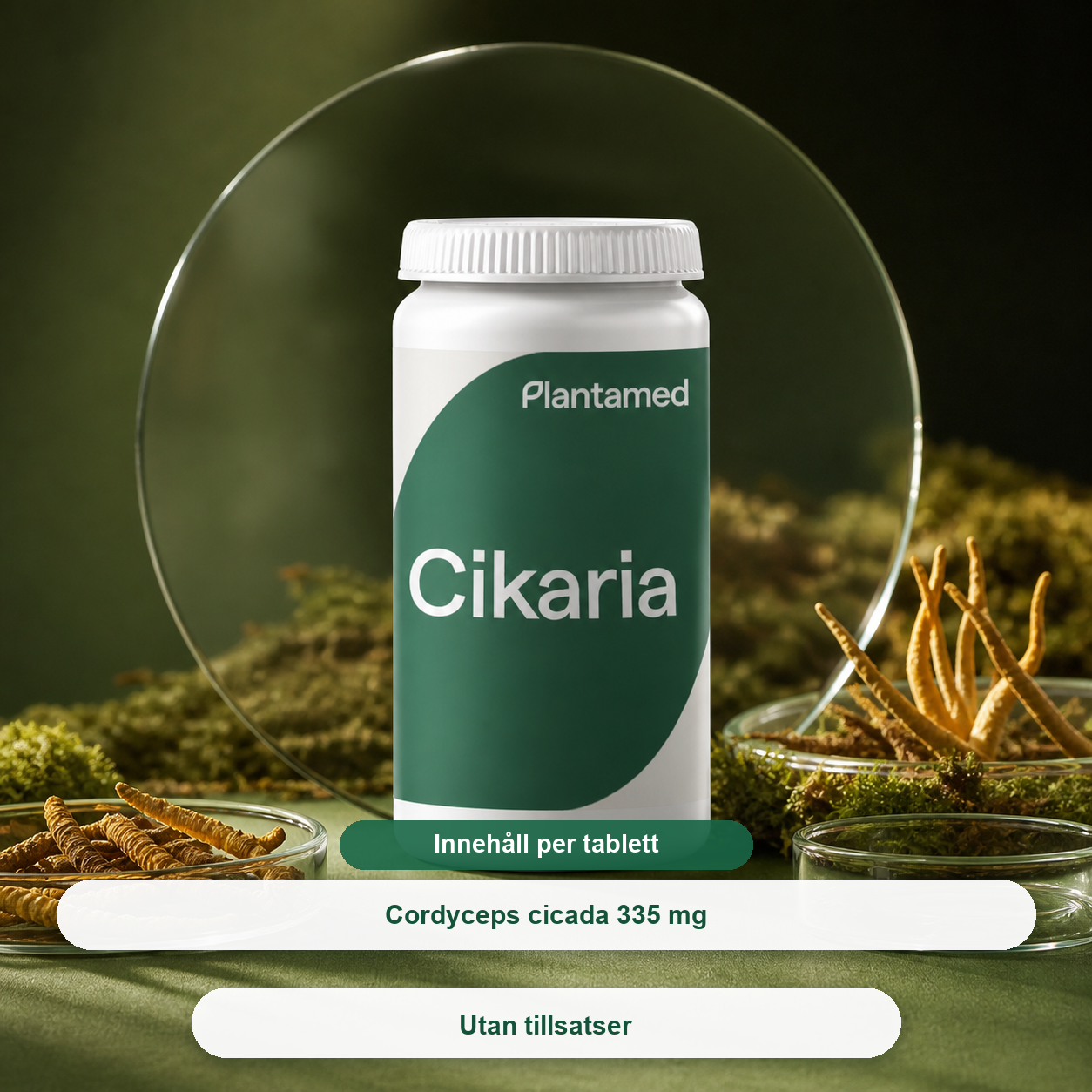
Plantamed Cikaria is a tablet-form dietary supplement containing Cordyceps cicada, also called cicada flower. According to the product information, each tablet contains 335 mg of Cordyceps cicada and no added ingredients. Recommended use is 3–9 tablets daily.
This makes the product easy to understand for people looking for a simple formulation with one main ingredient. It is still important to remember that dietary supplements should supplement, not replace, a varied diet and a healthy lifestyle.
See ingredients and product information for Plantamed Cikaria
Adaptogens is a common term used in discussions about certain plant and mushroom ingredients. The term is not itself an authorised health claim and should not be interpreted as a promise of a particular effect.
Check the species name, amount per tablet or daily serving, any additives and the recommended use. Choose information that is clear and possible to verify.
Check which species is stated, how much of the ingredient the product contains, and whether the product information discloses additives and recommended use. Do not use products as a replacement for medicines or medical advice.
When searching for adaptogens, medicinal mushrooms or Cordyceps, it is easy to get caught up in broad promises. A more considered approach is to begin with what can be checked: the species name, amount, ingredient list, recommended use and clear information from the manufacturer.
This helps you make a more informed choice and see the difference between a factual product description and claims that go beyond what the available information can support.
This article is intended for general information only and does not replace personalised medical advice.